Domestic, Exotic, & Burl Flexible Wood Veneer Made in the USA.
Domestic, Exotic, & Burl Flexible Wood Veneer Made in the USA.
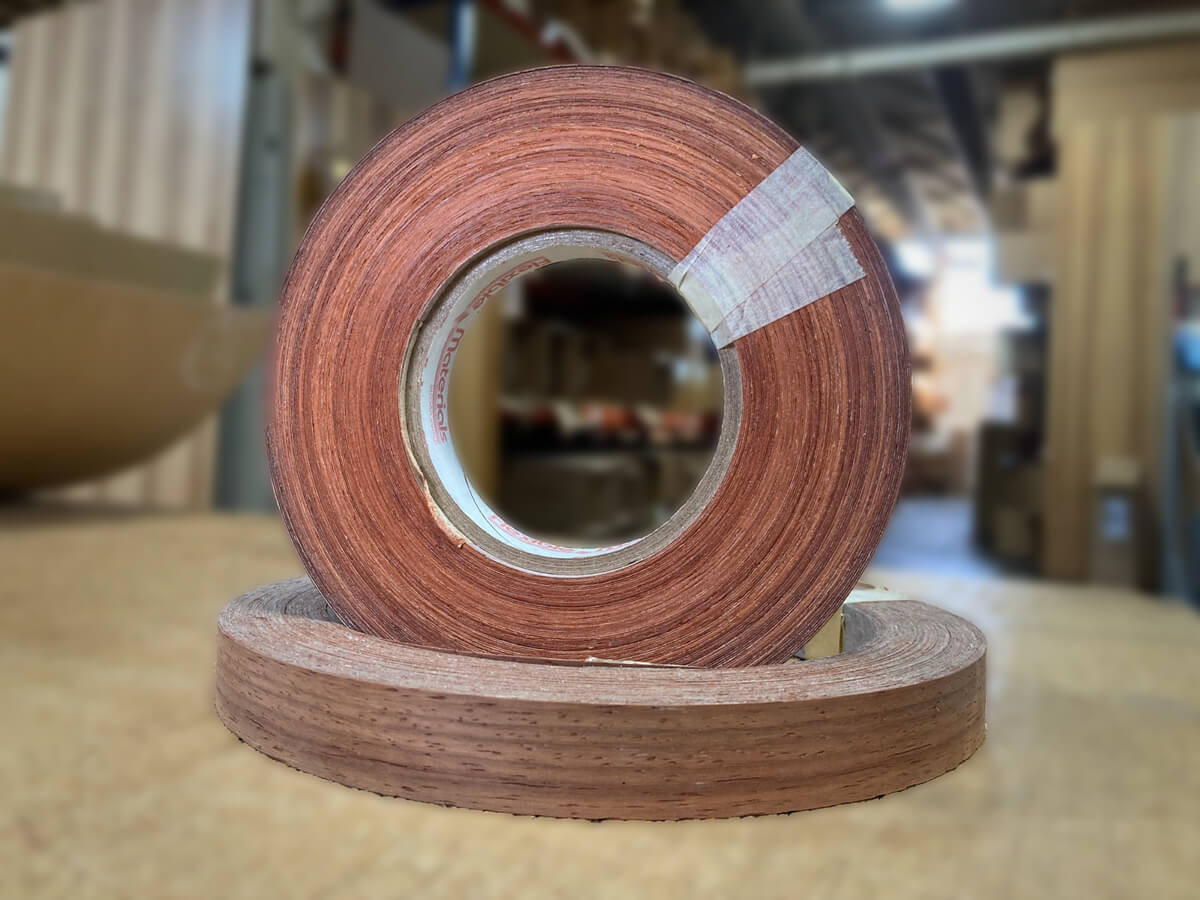
An exceptional architectural layup or custom cabinetry build is only as good as its finished edges. At Oakwood Veneer, our premium wood edgebanding is engineered specifically to provide a flawless, seamless transition that completely hides exposed substrate cores, plywood lines, and industrial panel joints.
Cut from the exact same elite face-grade logs as our industry-leading veneer sheets, our veneer edgebanding guarantees absolute color harmony, grain consistency, and structural reliability across your entire project run. Whether you are automating your output with a high-speed automatic edgebander or completing custom radii on the shop floor with a standard household iron, our real wood tapes deliver an unbreakable bond and clean, splinter-free trimming.
To support both high-volume industrial manufacturers and architectural finish shops, we stock our real wood tapes in two distinct operational configurations across our entire species library:
Pre-Glued Edgebanding (Hot-Melt Adhesive): Engineered for rapid, reliable manual application. This configuration features a high-performance, factory-applied hot-melt adhesive backing that activates quickly under a standard heat gun, edgebanding iron, or portable hand-held hot-air bander. Perfect for on-site casework refacing, custom closet builds, and curved architectural components.
Fleece-Backed Edgebanding (Non-Glued): Sourced specifically for high-volume automated manufacturing lines. This premium tape features an ultra-thin, highly flexible fleece backing layer that enhances cross-grain strength and eliminates splicing separation. Designed to feed flawlessly through automatic edgebanders utilizing independent EVA or PUR glue-pot systems.
We understand that commercial millwork blueprints vary wildly. To eliminate wasteful over-trimming and reduce your shop's labor overhead, we stock our real wood edge banding rolls in an extensive array of standard operational dimensions:
5/8" Width — Ideal for clean coverage on standard 1/2" composite boards.
3/4" Width — The industry standard for finishing traditional 3/4" cabinet doors, drawers, and shelf faces.
7/8" Width — Provides a comfortable, forgiving overhang margin for rapid trimming on 3/4" panels.
1" to 2"+ Widths — Custom heavy-duty structural widths stocked specifically for thick conference tabletops, partition walls, and deep architectural casework frames.
| Material Feature | Pre-Glued Hot-Melt Rolls | Fleece-Backed Non-Glued Rolls |
| Adhesive Configuration | Factory-applied heat-activated adhesive | Plain backing engineered for glue pots (EVA/PUR) |
| Application Tooling | Hand iron, heat gun, or portable bander | Industrial automatic automatic edgebanding machinery |
| Roll Length Availability | Convenient 50ft, 250ft, and 500ft rolls | High-yield 500ft continuous master industrial rolls |
| Species Synchronization | 300+ Species (Oak, Walnut, Maple, Cherry, Exotics) | 300+ Species (Perfect match to Oakwood sheets) |
| Trimming Performance | Clean, razor-sharp edges with zero adhesive gum-up | Splinter-free flush routing across end-grain paths |
Stop wasting billable shop hours trying to finish a high-end project with mismatched, off-the-shelf edge tape from retail hardware suppliers. We maintain a live factory inventory of over 300 real wood species—ranging from everyday shop essentials like White Oak, Walnut, Hard Rock Maple, and Cherry to highly exotic architectural options like Teak, Mahogany, and specialized Burl runs. Because our edge rolls and veneer sheets share matching production sources, you can say goodbye to embarrassing color shifts or clashing grain dynamics when you apply your final stains and clear topcoats.
Don't compromise a premium commercial contract or a meticulous residential furniture build by using low-grade, brittle edge coverings. Upgrade to an industrial-grade real wood edge banding tape that holds its bond, trims clean, and perfectly mirrors your veneer faces.
Ready to synchronize your materials? Select your required species, width profile, and backing infrastructure above to add standard rolls directly to your order.
Need a custom split width or a heavy-thickness architectural specification? Our Troy, Michigan factory regularly processes custom dimensions for specialized architectural specifications. Call our shop specialists directly at (800) 426-6018 to coordinate your project's matching requirements.

