Domestic, Exotic, & Burl Flexible Wood Veneer Made in the USA.
Domestic, Exotic, & Burl Flexible Wood Veneer Made in the USA.
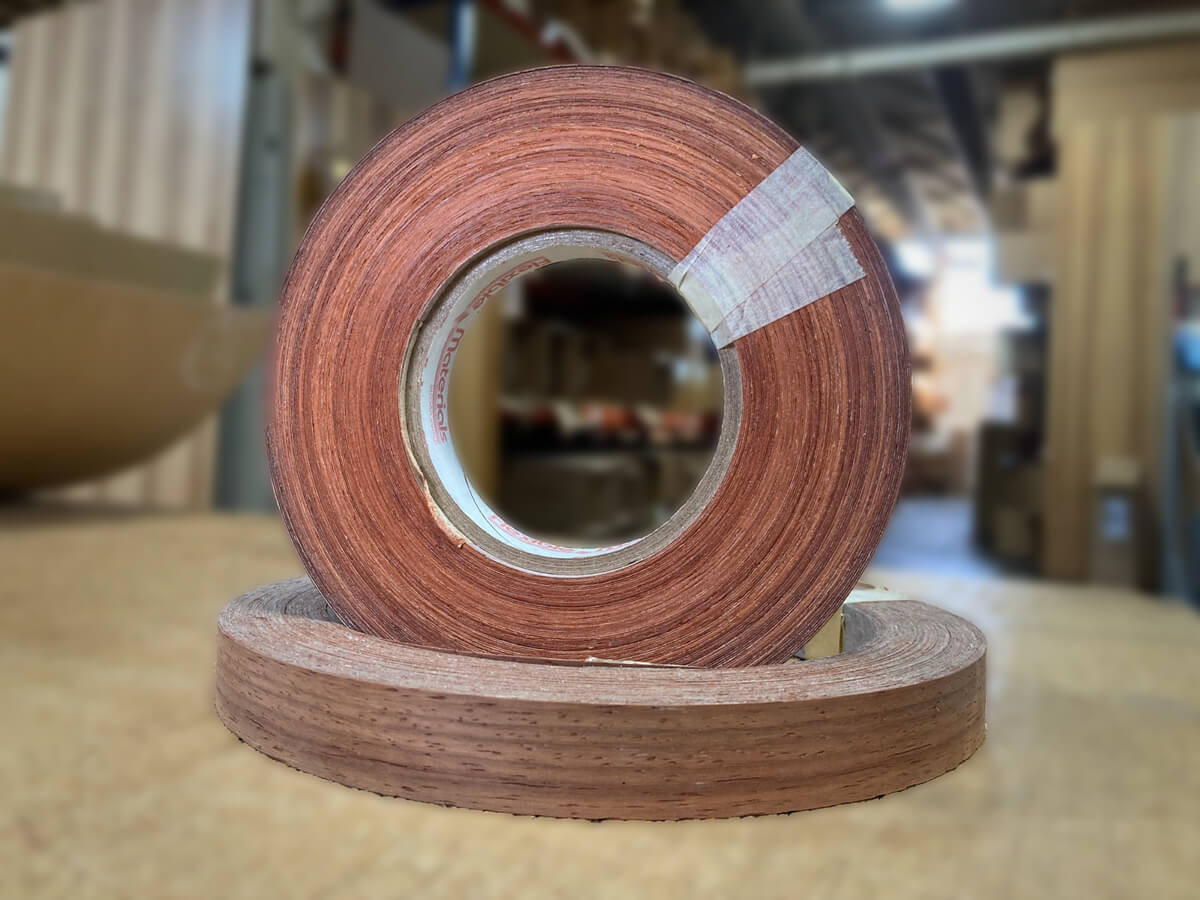
Finishing the exposed edges of plywood or MDF is a critical step in high-end woodworking. To achieve a professional, seamless look, you need materials that match the beauty of your primary surfaces. At Oakwood Veneer, we provide real wood edge banding designed to mirror the grain, color, and texture of our full-sized wood veneer sheets.
Whether you are a hobbyist or a high-volume shop, our selection includes over 50 species in-stock. From domestic favorites like White Oak and Walnut to exotic options like Zebrawood, Teak, and Bubinga, we have the perfect match for your project.
We offer several formats to match how your shop applies edging to your projects:
Pre-Glued (Iron-On): Features a high-quality hot-melt adhesive. The perfect solution for smaller shops; easily applied with a standard household iron or a heat blower.
Fleece-Backed (Non-Glued): Reinforced with a thin fabric backing for maximum flexibility and strength. This is the industry standard for automatic edgebander machines or manual application using contact cement.
Master Rolls: For large-scale cabinetry or commercial furniture runs, we provide bulk rolls to ensure color and grain consistency across your entire project.
Choosing the right width is essential for a clean, flush finish. We recommend selecting a veneer edge that is at least 1/8" wider than your panel thickness to allow for trimming.
| Panel Thickness | Recommended Width | Application Method |
| 3/4" Panels | 7/8" or 1" | Iron-on or Machine |
| 1" Panels | 1-1/8" or 1-1/4" | Iron-on or Machine |
| Architectural Panels | Custom Widths Available | Manual / Contact Cement |
The final quality of your piece depends on the application. Follow these professional steps for a seamless bond:
Surface Preparation: Ensure your panel edge is clean and dust-free. A light sanding of the substrate can significantly improve the adhesive bond.
Precision Trimming: Once the adhesive is cool and set, use a sharp edge banding trimmer or a flush-trim router bit. Always trim in the direction of the grain to prevent splintering.
Easing the Edge: After trimming, a light pass with a fine-grit sanding block at a 45-degree angle will "ease" the edge, making the transition between the face and the side invisible to the eye and touch.
Can your wood edge banding be stained? Yes. Because our edging is made from real wood, it accepts stains, oils, and clear coats exactly like your lumber or veneer.
Why choose wood veneer tape over PVC? While PVC is a plastic alternative, only real wood veneer edge tape provides the authentic warmth and grain continuity required for high-quality furniture. It turns engineered boards into pieces that look and feel like solid wood.
What is the best way to trim the excess? After the adhesive has bonded, use a dedicated trimmer or a sharp chisel. Trimming with the grain is the best way to ensure a smooth, professional result.
We ship all orders directly from our warehouse in Troy, Michigan. If you are unsure which species or format is right for your project, consult with our team. We reference the Canada Border Services Agency (CBSA) guidelines for all shipments crossing into Canada to ensure a smooth delivery process.
Ready to start? Select your species below to see pricing.

