


When a luxury retail project or a high-end residential interior calls for a focal point with high visual impact, few species carry the prestige of birdseye maple. Characterized by small, circular, dimpled distortions that interrupt the smooth grain of hard maple (Acer saccharum), this rare figure transforms a standard architectural surface into a dynamic, light-refracting canvas.
However, out on the shop floor, birdseye maple is notorious for being unpredictable. The very characteristics that make it beautiful—the swirling, highly contoured clusters of contorted wood fibers—create massive directional changes across the sheet.
For fabricators accustomed to straight-grained woods, processing birdseye can result in grain tear-out, uneven finish absorption, or checking. Succeeding with this species requires a firm understanding of how to specify the figure and how to stabilize it using modern backed sheets.
Specifying the Figure: Grading Birdseye Density
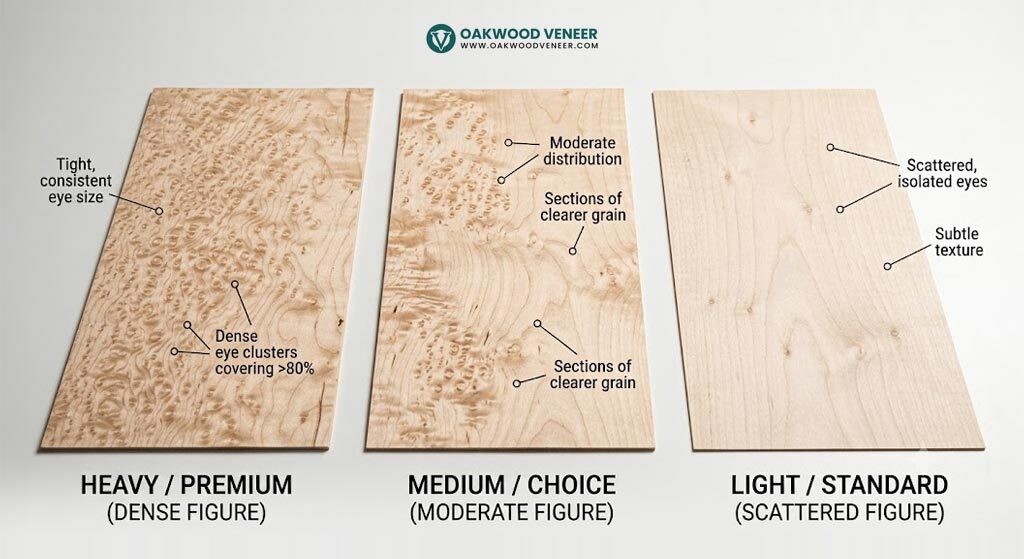
Not all birdseye maple wood veneer is created equal. The "eyes" are a natural phenomenon caused by a disruption in the tree’s cambium layer, meaning the density and size of the figure vary wildly from log to log. When specifying material for a commercial sequence, you must clarify the grading requirements with your supplier using standard trade terms.
|
Figure Grade |
Eye Density & Distribution |
Best Architectural Application |
|
Heavy / Premium |
Dense, tight clusters covering over 80% of the face; consistent eye size. |
High-end boardroom tables, luxury retail jewelry displays, custom instrument overlays. |
|
Medium / Choice |
Moderate distribution with sections of clear, swirling fiddleback or straight grain separating eye clusters. |
Premium wall paneling, high-end residential cabinetry, perimeter millwork. |
|
Light / Standard |
Scattered, isolated eyes across a mostly standard white maple background. |
Large-scale commercial installations where subtle texture is preferred over intense figuring. |
The Mechanical Standoff: Why Backed Sheets are Essential for Birdseye
If you try to work with raw, unbacked birdseye flitches, you face a major structural hurdle: the eyes themselves are inherently brittle. Because the fibers run perpendicular to the main sheet surface within each dimple, raw birdseye is prone to popping out, cracking, or wrinkling during dry storage and handling.
To eliminate this volatility on the bench, high-end shops rely on factory-backed birdseye maple sheets.
- Paper-Backed Sheets: Spliced, matched, and permanently bonded to a heavy paper substrate at the mill. The backer acts as a continuous tensile net, locking the brittle eye clusters in place and preventing them from fracturing during layout and trimming.
- Wood-on-Wood (2-Ply) Backers: Features a utility wood backer running perpendicular to the face veneer. This provides maximum stability, completely blocking any telegraphing from the substrate and giving the brittle birdseye face enough structural mass to handle complex radius work without splitting.
Bench Guidelines for Fabricating Birdseye Maple
When your backed sheets arrive on the floor, follow this specific processing sequence to preserve the face integrity:
1.Pre-Application Conditioning:Acclimation and Stress Relief.
Unbox the backed sheets and let them lay flat in your shop's climate-controlled assembly zone for at least 48 hours. Highly figured maple reacts quickly to humidity shifts; letting the wood face equalize with the backer prevents post-application blistering.
2.Trimming and Seaming:Zero-Tolerance Jointing.
When cutting birdseye sheets to size, always use a fresh, high-tooth-count laminate blade or a razor-sharp veneer trimmer. Because the grain direction changes every fraction of an inch around an eye, dull knives will instantly drag and tear out small chunks of the figure.
3.Adhesion Pressure:Scraper and Roller Settings.
Apply even, high mechanical pressure across the face using a dedicated veneer scraper or heavy roller. If utilizing contact cement, ensure 100% uniform coverage—any tiny void under a dense eye cluster can lift later when exposed to solvent-based finishes.
4.Controlled Sanding:Preventing Burn-Through.
Birdseye maple is hard, but the face veneer is thin. Sand carefully with a random orbital sander using 150-grit to 220-grit paper. Avoid aggressive hand-sanding over heavy eye clusters, as the end-grain nature of the eyes sands down faster than the surrounding long-grain fibers, creating an uneven, wavy surface.
A Note on Finishing Birdseye: The end-grain structure of the eyes absorbs stains and clear coats much faster than the rest of the sheet. To prevent the eyes from "mudding out" or becoming overly dark, apply a thin, clear wash coat or sealer before applying your final stain or high-solids lacquer. This locks the absorption rate, allowing the figure to pop cleanly with maximum depth.
The Shop Bottom Line
Executing a flawless interior with birdseye maple doesn't require luck; it requires eliminating material movement. By skipping the volatile raw flitches and opting for stabilized, pre-matched backed sheets, your shop can confidently bid on high-end architectural packages without worrying about grain blowouts, splits, or callback failures on the job site.