

In the shop, your finish is only as good as what’s underneath it. You can have the most beautiful walnut veneer sheets in the world, but if you glue them down to a substrate that moves, swells, or telegraphs every bump, that project is going to fail.
Picking the right core material is just as important as picking the veneer itself. Here is the straight talk on what you should (and shouldn't) be using for your next build.
Watch: Choosing the Right Substrate
Selecting the right base for your veneer panels is a make-or-break decision. In this video, we walk through the different options and show you exactly what to look for when prepping your core for a flawless bond.
In this video guide, we cover:
- Why MDF is often the top choice for stability.
- How to avoid "telegraphing" grain lines through your wood veneer sheets.
- The importance of a clean, dust-free surface for a permanent glue bond.
1. MDF (Medium Density Fiberboard) - The Pro’s Choice
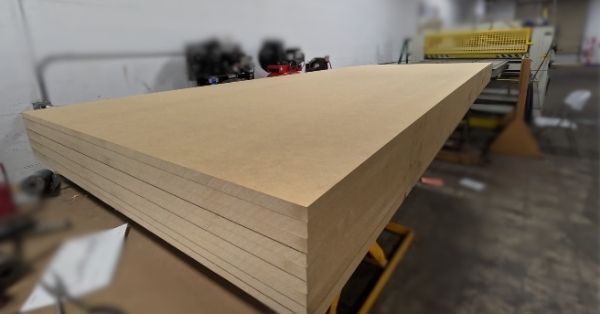
If you ask most guys who do this for a living, MDF is the gold standard for veneer panels.
- The Good: It’s dead flat, incredibly stable, and has no grain to "telegraph" through your thin veneer. Because it’s made of fine wood fibers and resin, it doesn't expand or contract nearly as much as solid wood or even plywood.
- The Bad: It’s heavy as a lead weight and it doesn't like moisture. If you’re building wood veneer for cabinets in a bathroom, make sure you’re using a moisture-resistant grade or sealing it up tight.
- Best For: Large tabletops, cabinet doors, and anything where flatness is the #1 priority.
2. High-Grade Plywood (MDF Core or Multi-Ply)
Standard construction-grade plywood from the big box store is a nightmare for veneer. It’s full of voids and the grain is too uneven. However, high-quality "Shop Maple" or MDF-core plywood is a different story.
- The Good: You get the strength and screw-holding power of plywood with a smooth surface for your wood veneer sheets. MDF-core plywood gives you the best of both worlds—it’s lighter than solid MDF but stays flatter than standard ply.
- The Bad: It can be pricey, and you still have to watch out for internal voids in cheaper plys that might cause the veneer to bubble later.
- Best For: Built-ins, heavy-duty shelving, and furniture carcasses.
3. Particle Board (Industrial Grade)
Don't confuse industrial-grade particle board with the cheap stuff used in "flat-pack" furniture. High-density particle board is actually a very reliable substrate for wholesale wood veneer projects.
- The Good: Like MDF, it’s very stable and doesn't warp easily. It’s also generally the most cost-effective option for large-scale commercial jobs.
- The Bad: The edges are brittle and don't hold screws well. You’ll definitely want to use an edge-band or solid wood "sub-edge" before you veneer.
- Best For: Large commercial wall panels and budget-friendly cabinetry.
Substrates to Avoid (The "Headache" List)
- Solid Wood: I know, it sounds counter-intuitive. But solid wood moves too much. If the solid board underneath expands and your veneer doesn't (or moves in a different direction), you’re going to see cracks or delamination.
- Lumber Core: Older furniture used this, but with modern wood veneer for furniture, it’s usually more trouble than it’s worth due to the "telegraphing" of the internal wood strips.
Pro Tip: Preparation is Everything
No matter what substrate you pick, it needs to be clean, dry, and scuffed up a bit. Dust is the enemy of a good bond. Give your substrate a quick once-over with 80 or 100-grit sandpaper to give the glue something to "bite" into.
And remember—if you’re veneering the front, you must balance it by veneering the back. We covered that in our guide on panel stability, and it’s a rule you don’t want to break.
Conclusion
At the end of the day, MDF is usually your best bet for a flawless finish, but high-quality plywood has its place when you need the strength. Take the time to prep your core correctly, and your wood veneer sheets will look like a million bucks for years to come.