

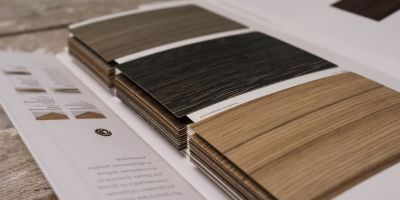
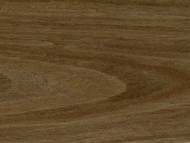
American Black Walnut veneer is prized across the architectural millwork and premium furniture industries for its deep, rich chocolate tones, complex grain characteristics, and structural versatility. However, achieving a flawless finish on a custom build or commercial project requires specifying the correct cut and figure standard. The method used to slice a log determines not only its visual symmetry but also how individual sheets must be matched and stabilized during assembly.
Looking for Ready-to-Ship Walnut Sheets?
If you are estimating a professional architectural project or preparing a custom shop fabrication run, view real-time inventory, grading structures, and factory backer configurations directly on our official Walnut Veneer Sheets collection page.
When selecting real wood veneer walnut configurations for your shop, there are six primary variations—ranging from clean, linear minimalist patterns to highly figured luxury cuts—that you can leverage for your next design layout:
1. Plain Sliced Walnut Veneer (Flat Cut)
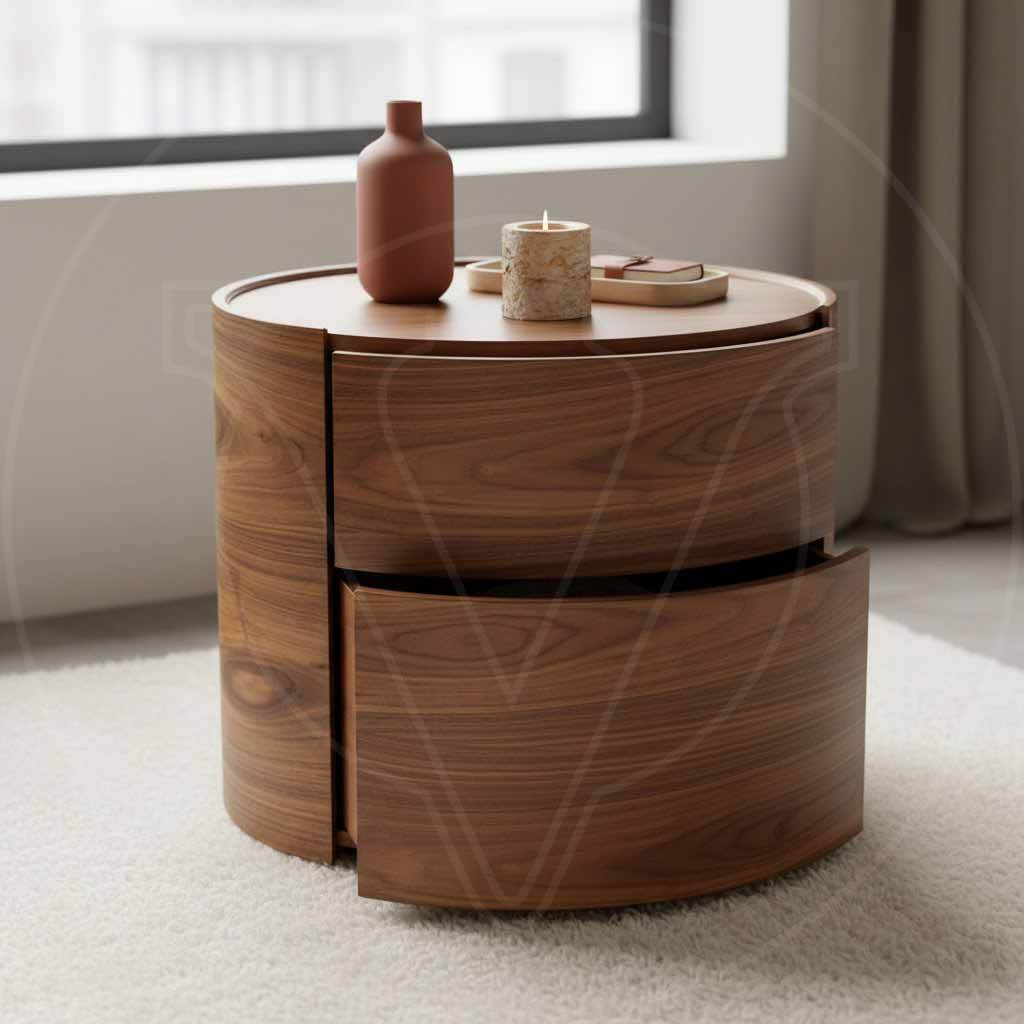
Appearance: Plain slicing is the most widely utilized manufacturing method for producing a classic walnut veneer sheet. By slicing a half-log parallel to its center axis, the blade creates a distinct, rolling "cathedral" grain pattern. These broad, sweeping arches are bordered by tighter, more linear grain structures along the outer edges of the sheet.
Industrial Application: This cut represents the industry baseline for architectural cabinets, residential casework, and premium office furniture. It provides an elegant, traditional wood grain appearance that lends itself perfectly to standard book-matching or slip-matching patterns across flat surfaces.
2. Quarter Sawn Walnut Veneer
Appearance: Quarter sawn walnut production requires slicing the log at a strict 90-degree angle to the growth rings. This specialized manufacturing technique completely isolates the straight, parallel grain lines of the log, eliminating the cathedral arches entirely. The result is a highly uniform, linear pattern with an understated, contemporary aesthetic.
Industrial Application: Highly specified by interior designers and commercial architects for modern vertical wall panels, seamless flush doors, and minimalist cabinetry where narrow, continuous lines are required across a wide field layout.
3. Figured Walnut Veneer
Appearance: Figured walnut wood veneer showcases naturally occurring, highly dramatic structural distortions within the wood fiber. Rather than a straight or arched grain path, figured sheets exhibit wavy, rolling, or three-dimensional curly patterns. These rare optical traits include distinctive variations like fiddleback, block mottle, and crossfire markings that shimmer under a finish.
Industrial Application: Reserved for high-end statement furniture, custom boardroom tables, architectural focal walls, and decorative marquetry where an eye-catching, luxurious aesthetic is required.
4. Walnut Burl Veneer
Appearance: Sourced from the dense, rounded, knobby outgrowths found at the base or root system of the tree, burl walnut veneer features no linear grain direction. Instead, it is a dense, swirling cluster of micro-knots, dark core eyes, and intricate, marble-like design rings trapped in a tight field configuration.
Industrial Application: This rare, premium cut is highly sought after for luxury automotive dashboard trim, high-end musical instruments (such as custom guitars and pianos), executive humidores, and delicate furniture inlays. Because of its irregular grain structure, burls are typically pressed onto specialized stabilizing backers to ensure dimensional performance during installation.
5. Crotch Walnut Veneer
Appearance: Sourced exclusively from the internal junction of the tree where the main trunk divides into massive primary limbs. This unique structural stress zone creates a highly dramatic, flame-like figure that radiates outward, often forming a rich V-shape or highly stylized feathered configuration.
Industrial Application: Historically specified for traditional luxury furniture reproductions, center-matched door inserts, and custom architectural accents requiring maximum visual impact.
6. European Walnut Veneer
Appearance: Also referred to as English Walnut, this variant offers a distinct color profile divergence from native American Black Walnut. European walnut features a slightly lighter, muted baseline color palette with complex, warm undertones. While its overall grain lines remain prominent, it frequently exhibits subtle dark streaks and smoky variations that add unique character.
Industrial Application: Extensively utilized in European-style millwork configurations, specialized gunstocks, premium architectural woodwork, and open-pore finishes where a lighter, nuanced species layout is required.
Technical Specification & Material Matrix
To help your millwork shop or fabrication crew maintain strict structural integrity and seamless alignment across your project field, reference our core technical layout pairing recommendations below:
| Walnut Veneer Cut / Figure | Recommended Application | Ideal Sheet Backer Selection | Matching Complexity |
|---|---|---|---|
| Plain Sliced (Flat Cut) | Architectural Cabinets & Casework | 10-Mil Paper / PSA Peel-and-Stick | Standard Book Match / Slip Match |
| Quarter Sawn (Linear) | Minimalist Accent Walls & Modern Millwork | 20-Mil Polyback / Wood-on-Wood (WOW) | Sequence Running / Slip Match |
| Walnut Burl / Crotch | Luxury Inlays & Dashboard Instruments | Phenolic Backed / Wood-on-Wood (WOW) | Blueprint Balanced / Sketch Match |
Securing the Right Foundation for Your Build
Whether you are edge-gluing a continuous layout or specifying full-scale walnut wood paneling for a commercial architectural bid, matching your species selection with the correct adhesive system, raw dimensions, or coordinated walnut edge banding profiles is paramount to preventing checking, bubbling, or seam separation over time.
Ready to review physical grading samples, evaluate substrate core specs, or secure a firm commercial quote for your workshop? Contact our team at the Troy, Michigan factory line directly at (248) 720-0288 for comprehensive engineering and freight logistics support.