

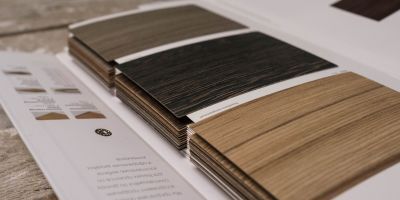


Step into a high-end corporate boardroom, a luxury hotel lobby, or a custom executive office, and you’ll often notice something striking: floor-to-ceiling wood wall panels that wrap seamlessly around the entire room, maintaining a continuous, uninterrupted flow of grain and color.
When you see that level of precision, you’re looking at more than just good craftsmanship. You’re looking at flitch sequencing and architectural wood veneer matching.
In residential woodworking, you can often get away with mixing and matching sheets or picking up a few random leaves. But when you are tackling a large-scale commercial build or an architectural millwork package, random wood variation will quickly derail the design. Here is how to navigate flitch numbers, matching styles, and commercial ordering like a pro.
Step 1: What is a Flitch and Why Does Sequencing Matter?
A flitch is the complete collection of individual veneer leaves sliced sequentially from a single log. Because tree logs naturally shift in color, density, and grain structure from the outside in, no two logs are identical.
- The Sequence Flow: When a mill slices a log, the leaves are kept in exact numerical order.
- The Commercial Standard: For a large room or multi-panel architectural installation, you cannot mix leaf #12 from Log A with leaf #85 from Log B. If you do, the color shift across the seam will be glaringly obvious. Keeping your panels sequence-matched ensures that every adjacent panel flows naturally into the next.
Step 2: Choosing Your Architectural Matching Style
How you arrange those sequential leaves dramatically changes the look and feel of the space. The three primary matching styles you need to know for commercial specifications are:
- Book Matching: Every alternate leaf is turned over (like the pages of a book). This creates a symmetrical, mirror-image pattern across the seam. It’s a classic choice for dramatic grain figures (like walnut or exotic burls) because it creates stunning, geometric patterns.
- Slip Matching: Consecutive leaves are placed side-by-side without flipping them. This results in a parallel grain pattern where every piece faces the same direction. Slip matching minimizes strong reflection differences and provides a cleaner, more modern linear look.
- Blueprint Matching: The gold standard of high-end architectural millwork. Here, veneer sheets are custom-engineered and sequenced specifically to fit precise room elevations, door placements, built-in cabinetry, and electrical cutouts. Every single leaf is accounted for on a master shop drawing.
Step 3: Best Practices for Ordering Commercial Veneer Quantities
Under-ordering veneer on a commercial job can spell financial disaster if the original flitch sells out before you can grab more.
- Factor in the Waste Multiplier: For standard commercial layouts, always add a 15% to 20% waste factor to your total square footage. You need extra material for trimming, mitered corners, grain matching around outlets, and edgebanding.
- Lock Down the Whole Flitch: If your project requires 500 square feet of rift-white oak, don't just order 500 square feet. Talk to your supplier and ensure the entire remaining footage of that specific master flitch is reserved for your order so you don't get stuck waiting on a mismatched batch halfway through installation.
PRO TIP FROM THE SHOP:
Always consult directly with your veneer supplier's sales team before bidding on large architectural packages. They can pull flitch photos, verify total available square footage in a single log, and help you choose the right cut and match style to meet the architect's exact specification.