

There’s a lot of bad info out there about wood veneer sheets. Some folks think it's "cheap" or "fake," usually because they're confusing it with that plastic wood laminate sheets stuff you see at the big-box stores.
If you’re looking to do a quality job, you need to know the facts. Let’s set the record straight on these common veneer myths.
Myth 1: Veneer is Just Fancy Plastic
The Fact: Laminate is just a picture of wood printed on paper with a plastic coating. Wood veneer is 100% real hardwood. It’s sliced thin, but it’s the real deal—grain, texture, and all.
-
Why it Matters: You can sand and finish veneer just like solid lumber. You can't do that with laminate. For wood veneer for furniture, there’s no comparison.
Myth 2: Veneer Warps and Cracks Easily
The Fact: When you build it right, veneer is actually more stable than solid wood. Most wood veneer for cabinets is glued to a stable core like MDF, which doesn't move nearly as much as a solid slab.
-
The Reality Check: While MDF doesn't warp like a solid plank, veneer movement on MDF is a common problem if you aren't careful. If you apply glue unevenly or—more importantly—if you don't "balance" the panel by veneering both sides, the veneer will pull on that MDF as it expands and contracts. That’s how you get bowing or surface cracks.
-
The Key: As long as you balance your panels with a backer and ensure a consistent glue line, that veneer isn't going anywhere.
Myth 3: You Can't Use it in a Kitchen or Bathroom
The Fact: Modern wood veneer sheets can handle a little moisture just fine. If you’re building cabinets for a bathroom, just use a moisture-proof backer (like Phenolic) and a good, tough topcoat. It’ll hold up for years.
Myth 4: It All Looks the Same
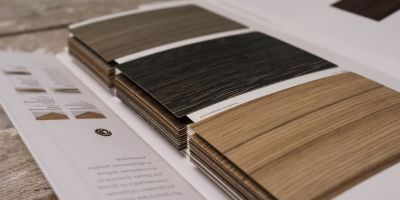
The Fact: You can get grain patterns in veneer that you’d never find in a solid board.
-
Check out the Figuring: Stuff like burl veneer or figured mahogany is stunning. You get these wild, complex patterns that would be impossible (or way too expensive) to find in solid wood.
-
Need Consistency? If you’re doing a huge run of veneer panels and they all need to match perfectly, go with engineered veneer. In the industry, this is also commonly called man-made veneer or recon veneer. It’s still real wood, but it’s been re-composed to have a flawless, uniform look across hundreds of sheets.
Myth 5: It’s Too Hard for a Beginner
The Fact: It used to be that you needed a big vacuum press to do veneer work. Not anymore. Products like PSA veneer (peel-and-stick) have changed the game. If you can use a utility knife and a roller, you can veneer a cabinet.