

The average kitchen remodel in 2026 can easily exceed $60,000. A massive chunk of that budget goes toward demolition and buying new cabinet boxes that might not even be higher quality than what you already have.
If your current cabinet "carcasses" (the interior boxes) are structurally sound and made of plywood or high-density particleboard, don't throw them away. Refacing with wood veneer allows you to achieve a "luxury custom" look for roughly 20-30% of the cost of a full replacement.
The Refacing Philosophy: Box vs. Face
Refacing is the art of covering the visible stiles and rails (the front frame) of your existing cabinet boxes with premium wood veneer sheets, then swapping out the old doors for new ones. When done correctly, the kitchen looks 100% new to the naked eye.
The Professional Workflow
If you want the bond to last twenty years, you have to work like a pro. Here is the step-by-step sequence we use in the shop.
1. De-Greasing (The Most Critical Step)
Kitchens are brutal environments for adhesives. If you apply veneer over a microscopic film of cooking oil, it will peel.
-
Scrub: Use TSP (Trisodium Phosphate) or a heavy-duty degreaser on every surface.
-
Sand: Follow up with a scuff-sand using 120-grit sandpaper. This creates "tooth," giving the adhesive a mechanical grip on the surface.
2. Material Selection: Picking the Right Veneer
Not all veneer is built for the same task. Here is how to spec your materials:
| Component | Recommended Material | Why? |
| Face Frames | 20-mil Paper-Backed or PSA | PSA "peel and stick" eliminates the mess of contact cement inside a finished home. |
| End Panels | 2-ply Wood-Backed Veneer | It's thicker and hides imperfections/voids in the side of the cabinet better. |
3. The "Oversize" Technique
Never try to cut your veneer to the exact width before applying it. You’ll miss.
-
Cut: Cut your veneer roughly 1/2" wider than the stile.
-
Bond: Center it and apply 40-50 lbs of pressure using a veneer scraper.
-
Trim: Use a "quad trimmer" or a razor-sharp chisel to trim the edges perfectly flush.
4. Grain Direction
To replicate the look of solid wood joinery, you must respect the grain:
-
Stiles (Verticals): Run the grain vertically.
-
Rails (Horizontals): Run the grain horizontally.
The "Pro" Secret: The Edge-Banding Sequence
To make a cabinet look like a solid block of wood, you have to hide the seams. At Oakwood Veneer, we teach the "Rail-then-Stile" method:
-
Step 1: Apply veneer to the horizontal rails first. Trim them flush.
-
Step 2: Apply veneer to the vertical stiles second.
Why? This puts the seam on the horizontal line, which is significantly less visible to someone standing in the kitchen. It also mimics the construction of a high-end face-frame built in a custom cabinet shop.
Pro Tip: If you're working in a high-humidity area like the Gulf Coast or a dry climate like Denver, remember to let your veneer acclimate in your home for at least 72 hours before you start the glue-up.
Ready to start your transformation?
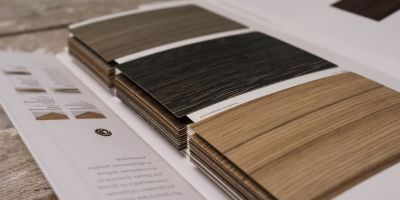
Don't let a "builder-grade" kitchen hold your home's value back. Whether you’re looking for White Oak, Walnut, or a rare Cherry, we have the sheets in stock to help you do it right.
Call our experts at 800-426-6018 to discuss your project and get the right backing for your specific cabinet type.