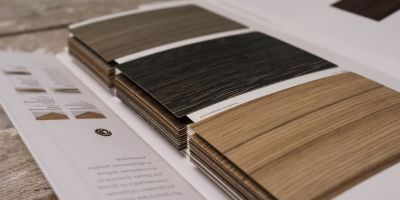

Every experienced shop lead knows the temptation. A massive pallet of premium sequential wood veneer sheets arrives at the delivery bay for a multi-million dollar commercial contract. The project manager is breathing down your neck about the schedule, the CNC operators are standing around waiting, and you want to start clipping, stitching, and pressing the faces immediately.
But you look at the shop hygrometer, look at the crates, and realize that wood just spent three days sitting in a dark, freezing or humid semi-truck. If you run those sheets through the press right now, you are looking at a certified disaster of checking, splitting, or massive warping down the line.
Wood needs to acclimate. There's no escaping the physics of it. But waiting 48 to 72 hours for a massive sequence of flitches to stabilize doesn't mean your shop floor production has to grind to a halt. Managing acclimation downtime is all about smart shop-floor choreography.
Let's look at how to keep your crew moving and your workflows efficient while the timber breathes.
1. The Physics of the Wait: Why We Don't Rush the Wood
When wood veneer sheets are manufactured and stored, they reach an equilibrium moisture content (EMC). The second they enter your shop, they begin fighting with your local air. If your shop is dryer than the shipping warehouse, the edges of the sheets will dry out and shrink faster than the center, creating a wavy, wrinkled edge called "scalloping." If your shop is more humid, the edges expand, causing the sheet to cup.
If you press a scalloped or cupped sheet, you lock that moisture tension directly into the glue line. As soon as the finished panels sit in an air-conditioned office building for a couple of weeks, the wood will pull itself apart trying to settle.
The baseline rule for large-scale architectural projects is a minimum of 48 hours of shop-floor stabilization. In extreme seasonal shifts (like mid-winter or mid-summer), make it 72 hours.
2. Stacking for Airflow: Speeding Up the Clock
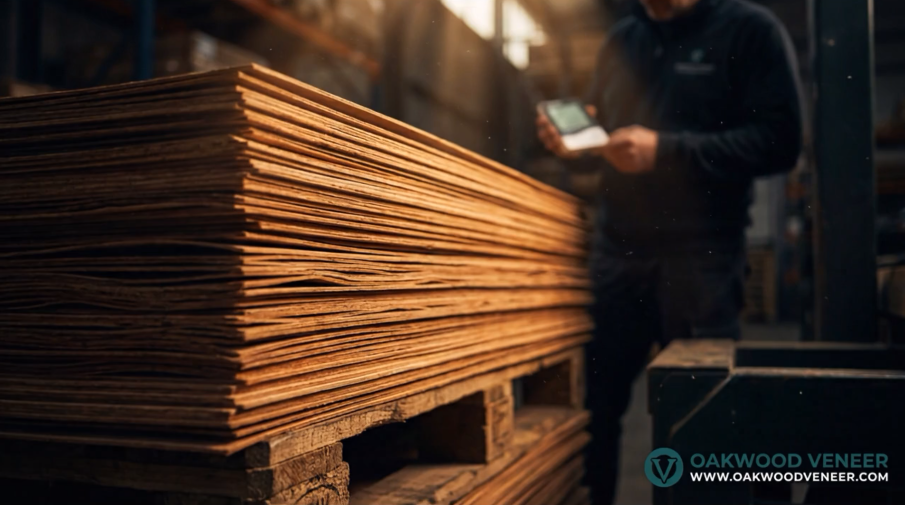
If you leave a massive sequence of wood veneer sitting in a tightly bound, plastic-wrapped bundle on a pallet, only the top sheet and the exposed edges are acclimating. The middle of the pack will stay exactly as it was when it left the truck.
To make acclimation uniform and efficient, you need to "sticker" or un-bundle the material immediately:
- The Slat Method: Break the flitches down into small, manageable books (usually 5 to 10 sheets max) and lay them flat on clean, level racking or clean benches.
- The Weighted Top: Put clean, flat MDF or particleboard scrap sheets on top of the stacks. This allows the air to pass over the edges and circulate through the bundles naturally while keeping the sheets flat and preventing the raw ends from curling up into potato chips as they adjust.
3. Chronological Choreography: Staggering the Workflow
To minimize shop downtime, an estimator or project manager needs to treat material arrival like an assembly line.
- Phase 1: Substrate Prep & Core Sizing (Days 1 & 2): While your face veneers are resting and stabilizing in the racking, your CNC and panel saws should be running full steam. Use the first 48 hours to cut all your MDF or particleboard core panels to exact size, rout out your hardware pockets, and prep your balancing sheets.
- Phase 2: The Staggered Delivery: If you have a massive, 200-panel installation, don't request the entire material order on a single day if you can avoid it. Coordinate with your supplier to stagger the delivery of the sequential bundles. If Flitch A arrives on Monday, it presses on Wednesday. If Flitch B arrives on Tuesday, it presses on Thursday. Your press operators stay in a continuous rhythm instead of facing a massive bottleneck.
- Phase 3: Sub-Assembly Work: Use the acclimation window to fabricate solid wood edge-bandings, face-frames, or interior cabinet web frames that will eventually receive the veneered panels.
In Summary: Keep the Shop Humming, Let the Wood Rest
Acclimation isn't a roadblock; it’s just the first step in a professional millwork sequence. By setting up dedicated stabilization racks, staging your substrate machining early, and organizing your delivery calendar, you can keep your crew productive without risking a single moisture-related callback.
Getting your production timelines perfectly dialed in starts with knowing exactly when your materials will hit the loading dock. We specialize in coordinating large-scale, sequenced shipments that line up perfectly with your shop's schedule. If you're plotting out a major commercial bid and need to plan out lead times, shipping cadences, or moisture metrics for premium Wood Veneer Sheets, give us a call. Contact our team today to review your production workflow or to get a comprehensive, competitive quote on stable, shop-ready Wood Veneer Panels.