

Wood veneer is prized for its natural beauty and cost-effectiveness compared to solid lumber, but like any premium wood product, it requires diligent care. Repairing and maintaining damaged wood veneer surfaces is essential for preserving the aesthetic value and longevity of cabinets, veneer panels, and fine furniture.
Veneer failure is rarely a fault of the wood itself; it is almost always a failure of the bond. In our experience at the shop, peeling typically stems from three sources: moisture exposure (common in kitchens), heat-induced adhesive fatigue, or "telegraphing," where the substrate expands at a different rate than the veneer. Identifying the cause is the first step toward a permanent repair.
Part 1: Repair Techniques for Damaged Wood Veneer
Quickly addressing damage is key to preventing moisture from reaching the core material.
1. Fixing Minor Scratches and Scuffs
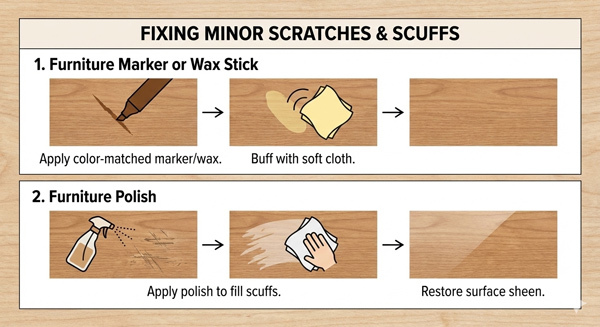
For hairline scratches and light surface wear that haven't penetrated the finish:
-
Furniture Marker or Wax Stick: Use a color-matched furniture marker or wax stick. Apply the marker or rub the wax into the scratch, then buff immediately with a soft, clean cloth to blend the repair with the surrounding surface.
-
Furniture Polish: Some minor surface scuffs can be minimized by applying a high-quality furniture polish, which temporarily fills the scratch and restores the surface sheen.
2. Repairing Small Chips, Dents, or Gouges
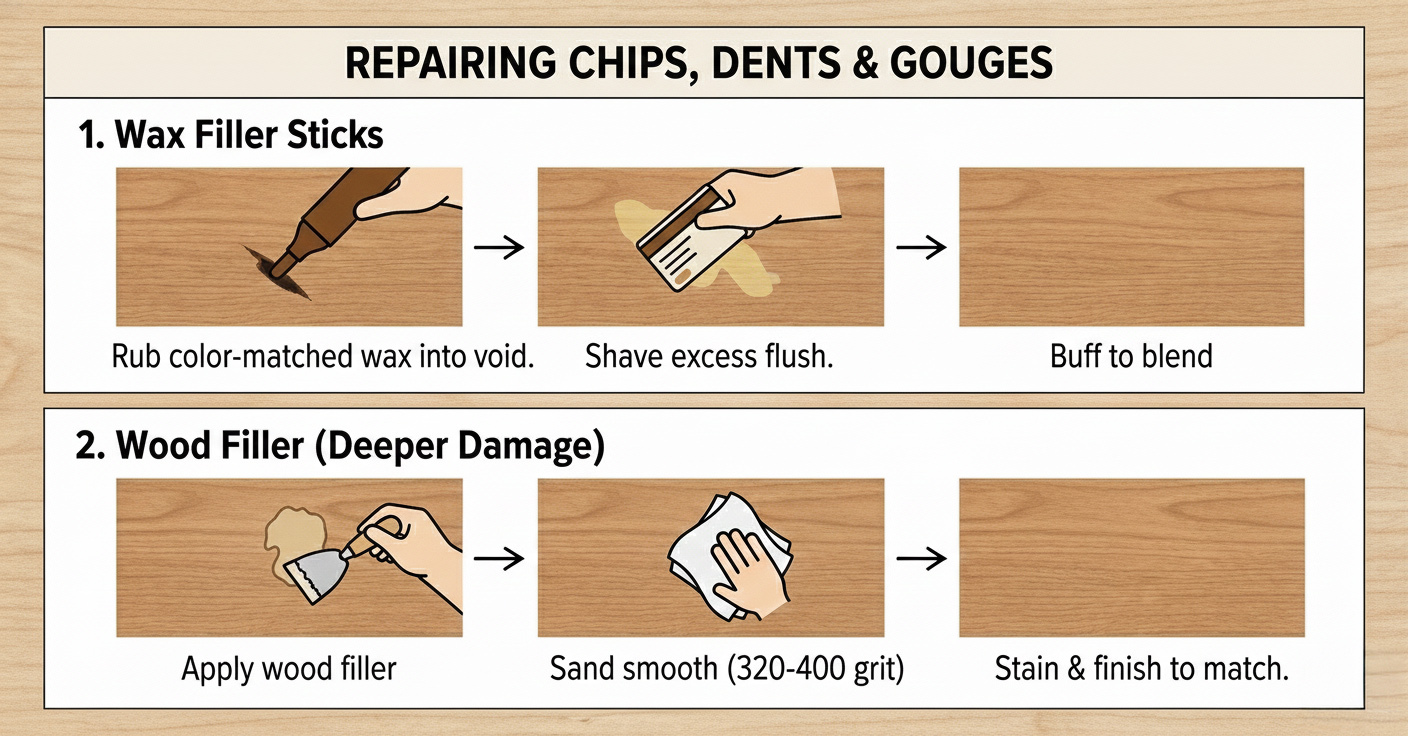
When surface material is missing but the damage is isolated:
-
Wax Filler Sticks: For small voids, rub a color-matched wax filler stick firmly into the damaged area. Use a plastic scraper (like a credit card edge) to shave the excess flush, and then buff the area to blend.
-
Wood Filler: For deeper chips, use a non-shrinking, solvent-based wood filler that matches the base color of the veneer. Apply the filler with a small putty knife, smooth it, allow it to dry completely, and then carefully sand it with fine-grit (320-400) sandpaper. Finish with a matching stain or clear coat.
3. Re-Gluing Loose or Peeling Veneer
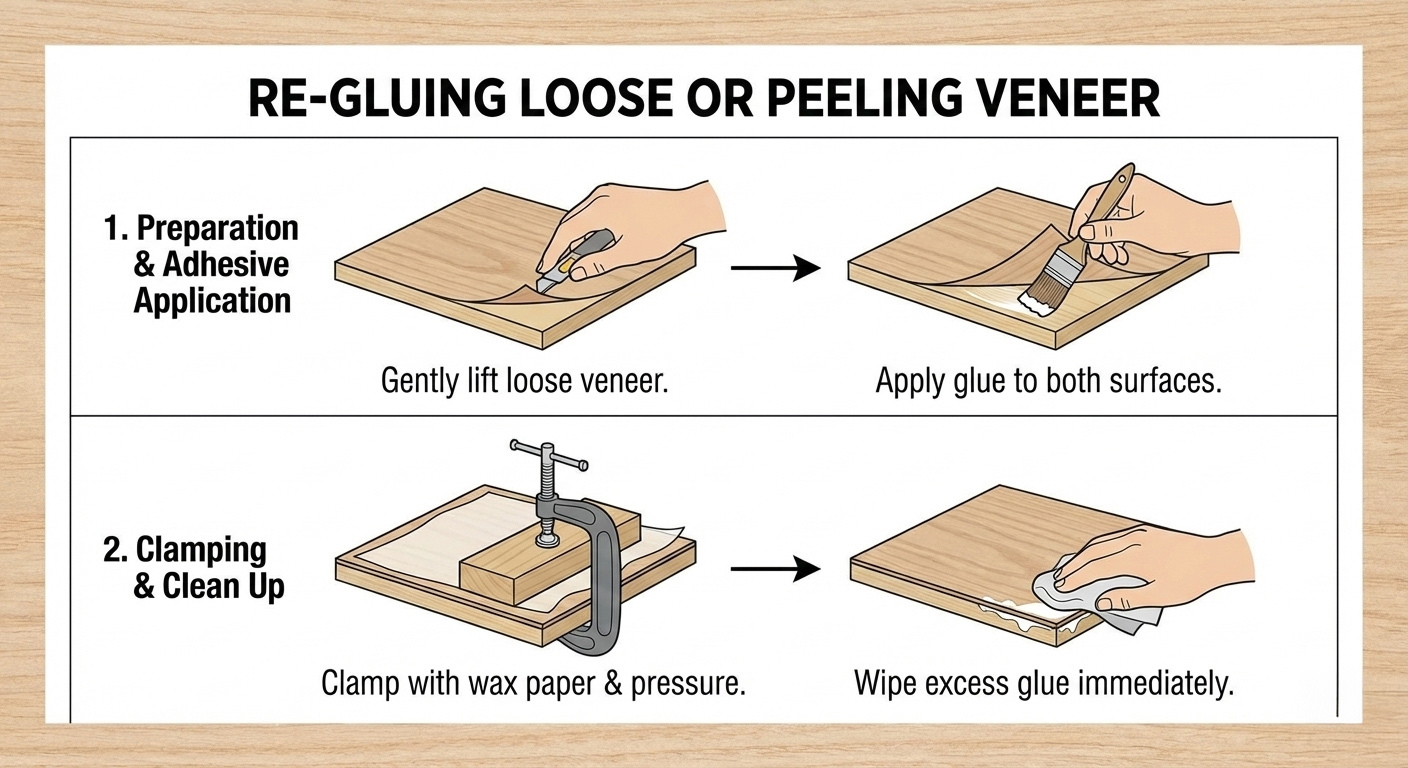
Veneer can lift or peel from the substrate (often due to heat, moisture, or age). This is most common along edges or corners.
Steps for Re-Gluing:
-
Preparation: Gently lift the loose veneer using a small utility knife or razor blade to allow access to the substrate. Avoid prying or forcing the veneer, which can cause it to crack.
-
Adhesive Application: Apply wood glue or contact cement directly to both the exposed substrate and the underside of the loose veneer section.
-
Clamping: Press the veneer firmly back into place. Place a piece of wax paper over the repaired area (to prevent glue from sticking to the clamp) and use a clamp or heavy, flat object to apply pressure while the glue sets (typically 6-24 hours).
-
Clean Up: Immediately wipe away any excess glue that squeezes out with a damp, warm cloth.
4. Replacing Large, Damaged Sections
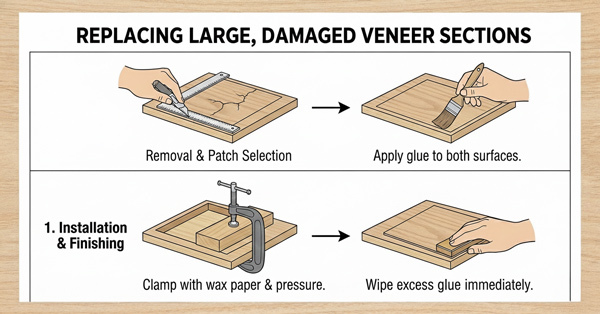
If a large area is warped, cracked, or missing, a section replacement may be necessary.
-
Removal: Carefully remove the damaged veneer using a sharp utility knife, scoring the perimeter and peeling or chiseling out the damaged material down to the core.
-
Patch Selection: Cut a matching piece of veneer sheet or flexible sheet veneer to fit the exact size of the removed section. Use the original removed piece as a template for accuracy.
-
Installation: Apply wood glue or contact cement to the exposed substrate and the back of the new piece. Press the new veneer firmly into the opening.
-
Finishing: Clamp or weigh the new veneer patch down until the glue is fully cured. Lightly sand the edges of the patch to ensure they are perfectly flush with the existing material, then apply a protective finish to blend the color and sheen.
Part 2: Essential Maintenance for Long-Term Veneer Preservation
For furniture makers and millworkers, educating clients on proper maintenance is crucial for ensuring the longevity of veneer panels and finished pieces.
1. Routine Cleaning and Protection
|
Action |
Best Practice |
|---|---|
|
Dusting |
Use a dry microfiber cloth. Dust acts as an abrasive over time. |
|
Cleaning |
NEVER use ammonia or harsh chemicals. Use a barely damp cloth with mild soap, then immediately wipe dry. |
|
Polishing |
Apply a high-quality beeswax or non-silicone polish every 6-12 months to create a protective barrier. |
2. Guarding Against Physical and Environmental Stress
-
Heat & Spills: Always use coasters. Immediate spills must be wiped to prevent the veneer from "checking" or bubbling.
-
UV Protection: Prolonged sunlight causes uneven fading. Place panels away from direct windows or use UV-filtering films.
-
Edge Banding Inspection: The edge is the most vulnerable point. Ensure your edge banding is sealed; any minor lift should be addressed immediately using the "Iron Method" mentioned above to prevent moisture from seeping under the main sheet.
3. Humidity Control for Architectural Projects
Wood veneer responds to its environment. For large architectural panels, maintaining stable indoor humidity (40-60%) is vital. Extreme fluctuations can cause the veneer to expand and contract at a different rate than the core, leading to cracking or delamination.
When to Refinish: Restoring Dull Veneer
If your veneer is dull or has extensive shallow scratches, a professional refinish may be required.
-
Light Sanding: Use extremely fine sandpaper (320-400 grit) to lightly sand the surface. The goal is only to scuff the existing finish, not to wear through the thin veneer layer.
-
New Topcoat: Apply a fresh coat of clear varnish, lacquer, or polyurethane.
-
Test First: Always test your sanding technique and topcoat application on a hidden area (like the underside of a table lip) to confirm you do not penetrate the thin wood layer before proceeding to the main surface.
Summary: Professional FAQ
-
Can you glue veneer back down? Yes, but success depends on removing old, crystallized glue. Use a fine blade to clear the gap before applying fresh adhesive.
-
How do you fix wood veneer lifting at the edges? Clean the underside, apply a thin layer of wood glue, and use a clamp with a flat wood block to ensure even pressure.
-
Can you sand peeling veneer? Only after it has been fully re-bonded. Sanding a loose edge will cause the veneer to catch and shatter.