

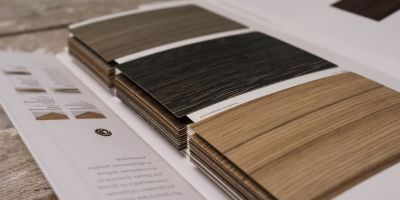

When working with wood veneer, the quality of your cuts is what separates a professional project from a messy one. A sharp knife can work for small projects, but for a truly clean, precise cut, a specialized veneer saw is the tool for the job. These saws are designed to make flawless cuts across the delicate grain of veneer, without chipping or tearing.
This guide will help you understand the different types of veneer saws and how to choose the right one for your project.
Why a Veneer Saw is Essential
Regular saws are too aggressive for thin veneer sheets and will almost always cause chipping, cracking, or splintering. A veneer saw is specifically designed with a fine-toothed blade to make a smooth, clean cut, which is critical for creating invisible seams when joining sheets.
Types of Veneer Saws
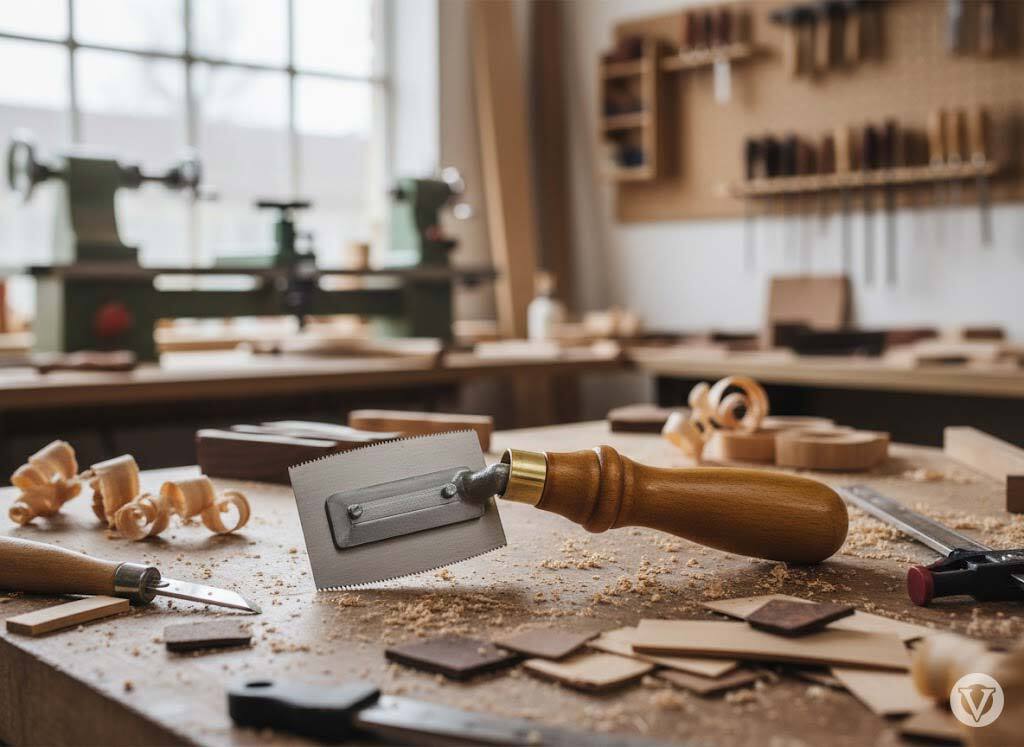
There are a few different types of saws you can use for cutting veneer, each with its own advantages.
- Traditional Veneer Saw: This is a specialized handsaw with a short, thin blade and very fine teeth. The blade is often set at a shallow angle to cut through the veneer with minimal resistance. This is the go-to tool for a clean, straight cut on a table or work surface.
- Flush-Cut Saw: A flush-cut saw has a handle that is offset from the blade, allowing you to cut material perfectly flush with a surface. While not a true veneer saw, it is an essential tool for trimming excess veneer after it has been applied to a substrate.
- Utility Knife / Straight Edge: For very thin veneers or small, straight cuts, a sharp utility knife with a steel straight edge can be used. This requires a very steady hand and a new, sharp blade for every cut to prevent tearing.
- Rotary Cutter: For paper-backed or fleece-backed veneers, a rotary cutter can be used to make clean, straight cuts quickly and efficiently.
How to Choose the Right Tool
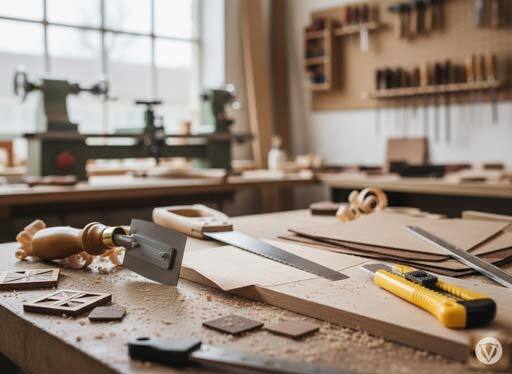
The best veneer saw for you depends on the type of project and the material you're working with.
- For professional, high-precision work, a traditional veneer saw is a must.
- For trimming veneer after application, a flush-cut saw is indispensable.
- For small DIY projects or quick cuts on backed veneer, a sharp utility knife can get the job done.
Conclusion
A quality veneer saw is a worthy investment for any woodworker who wants to achieve professional results. By choosing the right saw for your project, you'll ensure a clean, precise cut that makes all the difference in the final look of your work.