

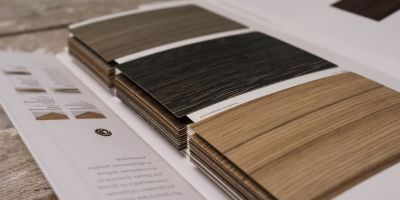

Walk into any high-end hotel lounge, trendy restaurant, or corporate headquarters designed over the last decade, and you were almost guaranteed to be met with the same color palette: stark whites, clinical grays, cold concrete, and industrial black metal accents. It was the era of minimalism, and while it looked clean, it often felt about as welcoming as a hospital waiting room.
But if you look at the architectural specs crossing your desk right now, you’ll see that the tide has officially turned. The corporate and hospitality worlds are experiencing a massive aesthetic shift. Cold minimalism is out, and "organic warmth" is completely taking over.
Designers are trying to create spaces where people actually want to linger—environments that feel comfortable, premium, and human. That means a massive resurgence in timber interiors. As a fabricator or millwork shop, capitalizing on this trend isn't just about ordering a few random sheets of plywood. It requires understanding how designers are using specific wood grain geometries, honey tones, and rich walnuts to create these modern, inviting spaces.
Let's dive into the core palettes driving the project specifications this year and how to execute them flawlessly in your shop.
1. The Honey Tones: Moving Past Bleached Timbers
For a long time, if a project called for light wood, architects automatically defaulted to heavily bleached, almost-white ash or standard flat-sawn plain maple. In the current design landscape, designers are chasing golden, amber, and rich honey undertones.
- The Species to Watch: Rift White Oak veneer remains an absolute juggernaut, but the way it's being finished has changed. Instead of clear, natural topcoats that can occasionally look pale, or heavy white-washes, specs are calling for warm amber sealers that draw out the golden hues of the wood fibers. Cherry is also seeing a quiet, premium revival—not the dark, heavily stained burgundy look of 1990s boardrooms, but raw, lightly oiled cherry that showcases its natural, warm honey-to-caramel progression.
- The Match Strategy: When laying out honey-toned feature walls, designers are leaning heavily toward Slip Matching. Because slip matching slides consecutive sheets side-by-side without flipping them, it keeps the light reflection completely uniform across the wall. This avoids the "barber-pole" effect (alternating light and dark stripes) that can sometimes distract from the smooth, continuous warmth of a golden wall.
2. Deep Walnut Veneers and Muted Burl Veneer: Tactile Luxury
While light, warm spaces are popular for open corporate offices, luxury hospitality spaces—like boutique hotel lobbies, high-end cocktail bars, and executive suites—are doubling down on deep, dramatic, dark tones. But instead of the cold, black-stained woods of the past, they are utilizing the deep, chocolate luxury of Walnut.
- The Texture Shift: It’s all about touch and visual depth. Designers are pairing straight-grain Rift Walnut on large wall surfaces with highly figured focal points, such as Walnut Burl or Mappa Burl on accent panels, reception desks, and bar faces. The wild, swirling cathedrals and clusters of a burl add an instant sense of historic prestige and organic texture that breaks up modern, hard-edged architecture.
- The Match Strategy: For walnuts and exotics in these luxury spaces, Book Matching is still king. Symmetrically mirroring the leaves creates stunning, balanced centerpieces that draw the eye directly to the natural artistry of the log.
3. Grain Geometry: The Linear Perfection of Rift-Sawn Timber
The modern version of "warmth" is still highly structured. Designers don't want the wild, chaotic, rustic knots of cabin-grade lumber; they want clean lines paired with organic color. This is why Rift-Sawn and Quarter-Sawn cuts are dominating commercial specs.
By slicing the log at a strict angle to the growth rings, the manufacturer produces wood veneer sheets with tight, straight, linear grain lines running vertically down the sheet.
- Why It Works: Linear grain acts as an architectural tool. Running rift-sawn wood veneer sheets vertically up a corporate lobby wall pulls the eye upward, making ceilings feel higher and spaces feel grander. It provides the clean, geometric structure required for modern commercial design while delivering the unmistakable acoustic and visual warmth of real timber.
In Summary: Line Up Your Palettes for the Modern Market
The cold, gray era has run its course, and clients are paying a premium for spaces that feel alive, warm, and inviting. For a commercial millwork shop, staying ahead of this trend means knowing how to source, match, and finish the warm walnuts, rich oaks, and complex burls that architects are actively sketching into their renderings.
Hitting these precise design metrics requires a material partner who can deliver flawless consistency across hundreds of sequential sheets. Whether you are matching a continuous run of straight-grain Rift White Oak for a hotel corridor or laying out a jaw-dropping Walnut Burl feature wall for a corporate reception desk, we have the specialized inventory to make it happen. Contact us today to discuss current design trends, request targeted samples for your submittals, or to get an accurate, wholesale quote on premium Wood Veneer Sheets and perfectly balanced Wood Veneer Panels.