

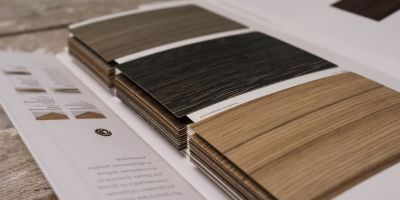

In a professional woodwork shop, backed wood veneer sheets—whether paper-backed, poly-backed, or pressure-sensitive adhesive (PSA)—are a massive time-saver. The factory does the heavy lifting of slicing, sequencing, and stabilizing the wood face, giving you a wider, flatter sheet that is ready to apply to your substrates.
But because these are composite materials, accepting a shipment without a bench-side audit is a gamble. A minor defect in the backing bond, an unacclimated sheet, or fractured grain from shipping stress can cause immediate telegraphing, bubbling, or edge failure once it is glued down.
To protect your shop’s throughput and material costs, your team needs to know exactly how to check veneer material quality the moment a shipment of backed veneer arrives. Use this operational checklist at the workbench before starting your layout.
The Backed Veneer Quality Checklist
1.Unrolling and Flatness Inspection: Target: Roll Memory and Stress Lines.
Most backed veneers arrive rolled in boxes. Unroll the sheets onto a flat workbench and allow them to relax. Inspect the surface under angled lighting for any sharp creases, crimps, or fractures running perpendicular to the grain.
- The Risk: If a sheet was rolled too tightly or handled roughly in transit, the wood face can fracture while the flexible backing remains intact. These tiny fractures are hard to see when flat, but they will split wide open under a veneer scraper or pressure roller, ruining your finish.
2.Backer Delamination Check: Target: Edge Bond Integrity.
Inspect the perimeter of the sheet where the wood veneer face meets the paper, wood, or poly backing. Run a thumb along the edges, applying light pressure to check for any separation between the layers.
- The Risk: If the factory glue line between the veneer face and the backer failed at the margins, moisture from your shop adhesive or the environment will creep into that void. This causes localized delamination, lifting, and edge failures that cannot be rolled out after the sheet is applied to the substrate.
3.Acclimation & Cupping Audit: Target: Ambient Moisture Balance.
Check the sheet for extreme cupping or curling along the length. Use a pinless moisture meter to ensure the wood face is stable (ideally between 6% and 8% moisture content) and matches your shop’s relative humidity.
- The Risk: Because a backed sheet joins two different materials (wood face + paper/poly backer), they expand and contract at different rates. If the sheet is exposed to high humidity before inspection, the wood face will expand while the backer stays stable, causing severe cupping. Applying an unacclimated, cupped sheet leads to trapped air pockets and telegraphing bubbles.
4.Adhesive and Release Liner Audit:Target: Liner Adhesion (For PSA / Peel-and-Stick).
If you are inspecting pressure-sensitive adhesive (PSA) sheets, examine the protective release liner on the back. Ensure the liner is completely flat, uncreased, and fully adhered to the adhesive layer without any air pockets or premature peeling.
- The Risk: Voids or bubbles under the release liner allow air to dry out the pressure-sensitive adhesive before you ever peel it. This leaves dead spots on the back of the sheet that will fail to bond to your plywood or MDF core, creating permanent blisters under the surface.
Defect Triage: Actionable Shop Parameters
Not every minor issue requires a vendor return. Use this guide to determine if a backed sheet can be conditioned or if it needs to be rejected.
|
Defect Identified |
Root Cause |
Shop Floor Action |
|
Severe Roll Memory / Curling |
Sheet remained boxed or cold too long |
Allow the sheet to acclimate face-down on a clean workbench under a flat sheet of plywood for 24–48 hours to flatten naturally. |
|
Edge Delamination (Face from Backer) |
Defective factory glue line |
Reject the sheet. If the backer is separating from the wood face at the edge, the structural integrity of the composite sheet is compromised. |
|
Wrinkles or Voids in PSA Liner |
Shipping stress or moisture exposure |
Inspect the exposed adhesive under the wrinkle. If the adhesive is dry or contaminated with dust, trim that section out or reject the sheet. |
|
Surface Cupping (Sheet edges curling up) |
Moisture differential between face and backer |
Acclimate the sheets in your shop's climate-controlled environment. Stack them flat with weights to allow the wood face to equalize with the backer. |
The Shop Bottom Line
Inspecting backed veneer sheets is all about verifying that the bond between the wood face and the stabilizing backer is dead flat and structurally sound. Spending five minutes at the bench to check for roll fractures, edge separation, and proper acclimation is your ultimate insurance policy. Catching a composite failure before you apply adhesive saves your substrate, your labor hours, and your shop's bottom line.