

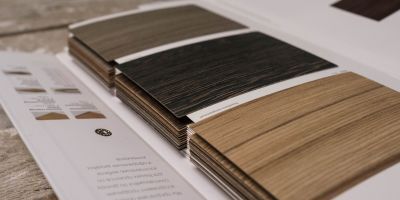

You've got a cabinet, shelf, or desk that needs a fresh look. Veneer could be just the thing. But before you start, you'll need a few basic tools, a solid surface, and a sheet of veneer that fits the job.
You can often find the tools at Home Depot, Lowe's, or Menards. The trick is knowing what to buy locally and what to compare before choosing your veneer. You don't need a fancy workshop to get started, but you do need a plan that fits the material.
Your Hardware-Store Shopping List
For a simple, flat panel, you don't need a shop full of fancy tools. Start here:
- Tape measure and metal straightedge: For checking sizes and guiding cuts.
- Sharp utility knife and spare blades: For trimming suitable backed veneer on a safe cutting surface.
- Sanding block and sandpaper: For getting the core smooth and ready.
- Clamps and flat boards: Useful when your glue and pressing method require even pressure.
- Eye protection and dust control: Important whenever you're cutting or sanding.
- Adhesive: Choose it after you know the veneer backing and the surface you're covering.
- Edge banding, if needed: For finishing exposed plywood or MDF edges.
For more detail, see Oakwood's guide to tools for cutting and shaping veneer.
Can You Buy Veneer at Home Depot, Lowe's, or Menards?
Sometimes, yes. These stores may sell edge banding, smaller pieces, and even larger veneer facing sheets online. But species, sizes, backing choices, and local stock can vary.
Before making the trip, check what you're actually getting. Is it real wood veneer? Is the sheet large enough? Is it paper-backed, preglued, or peel-and-stick? Will you be able to get enough matching material for every door or panel?
A quick look at those details can save a second trip—or a second order. Online availability doesn't always mean the product is sitting on your local shelf, so check the pickup or delivery options too.
When a Veneer Specialist Can Help
I buy hardware and tools at Home Depot, Lowe's, and Menards myself. They're handy for getting a project started. Some local stores may have just one or two veneer sheets in stock, while Oakwood Veneer stocks thousands. In fact, we offer 400 veneer species from six continents. Veneer is our specialty, and that selection helps when you need the right size, grain, or matching sheets for several doors or panels.
At Oakwood, you can compare those options and get help matching them to the job. That matters whether you're after a simple oak panel or a special grain for a whole row of cabinet doors. The right dimensions matter, too: a sheet that is just a little short can turn a straightforward job into a patchwork project.
Not sure where to start? Our guide to choosing the right veneer backer explains common options.
Three Checks Before You Start Gluing
- Check the surface. Veneer needs a clean, flat, stable core. MDF and suitable plywood are common choices, but not every board is ready right off the rack. See our substrate guide.
- Match the glue to the veneer. Not every adhesive works with every backing. Follow the product instructions for glue, pressure, and drying time.
- Make a test piece. Try the bond, trimming method, and finish on a sample before working on the real panel. That's a lot easier than fixing a mistake across an entire cabinet door.
Before starting a larger job, it's also worth checking how much extra veneer you'll need for trimming. A little spare material is useful; buying far more than you can use isn't.
When you're ready to apply the sheet, Oakwood's wood veneer application guide walks through the process.
Get the Tools Locally. Choose Veneer That Fits.
There's nothing wrong with grabbing a sharp blade, straightedge, or clamps at your local hardware store. That's often the easy part.
For the veneer, take a minute to choose the species, size, and backing that work for your project. Explore Oakwood's wood veneer sheets, and ask us if you want help making the right call before you start cutting.