

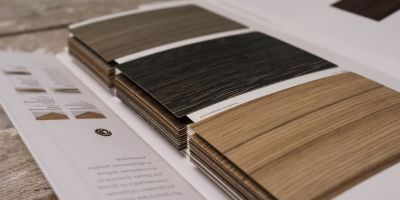
In the architectural world, your finish is only as stable as the substrate beneath it. When you're building high-end woodworking panels, the choice between MDF and Plywood isn't about which one is "better" in a general sense—it’s about the physics of how wood moves. If you pick the wrong one for the wrong environment, you’re going to be looking at a potential problem.
The Case for MDF (Medium Density Fiberboard)
Ask any professional architectural shop what they default to for veneer panels, and the answer is almost always MDF. Here’s why we tradesmen swear by it:
- Isotropic Stability: Unlike solid wood or plywood, MDF is "isotropic." That’s a fancy way of saying it has no grain direction. It doesn’t give a damn which way the wind is blowing or how humid the shop gets; it expands and contracts at the same rate in every direction. This is the secret to a panel that stays flat.
- Zero Telegraphing: This is the big one. If you glue a high-end white oak veneer over a standard plywood core, eventually you might see the "ghost" of the plywood grain through your face veneer. This is called telegraphing. Because MDF is as smooth as a sheet of glass, there’s nothing underneath to show through.
- The Glue Bite: The uniform fiber structure of MDF allows for a consistent "bite" when using contact cement or PVA glues. You don’t get the micro-bubbles or dry spots that plague uneven plywood surfaces.
The Case for Plywood (And When to Avoid It)
Plywood has its place—mostly when you need structural weight-bearing, like long, unsupported shelving. But for veneer work, standard "Big Box" construction plywood is your enemy.
If you absolutely must use a plywood core, you need to step up to Industrial Grade Veneer Core or Baltic Birch. Standard plywood contains internal voids—pockets of air where a knot was skipped in the middle layers. As the air inside those voids expands and contracts, it can cause your veneer to crack, check, or even pop off.
Weight, Fire Ratings, and The "Real World"
When you're bidding on architectural jobs, remember that MDF is heavy. If you're building an 8-foot-tall door, you need to consider the hinges. Also, for commercial interiors (hotels, hospitals), you might be required to use Fire-Rated MDF. These boards have a pink or red tint to the core and are designed to meet strict building codes. Don't get caught with a standard board on a job site that requires Class A fire ratings.
The Pro Verdict: For 90% of wood veneer sheets applications, MDF is the superior choice for a mirror-flat, stable finish. Once you've chosen your core, the next step is ensuring a permanent bond; learn more in our guide on picking the best glue for wood veneer.
Expert Support for Your Build Selecting the right core is only half the battle; the face of your project deserves the finest timber available. At Oakwood Veneer, we stock over 400 types of wood veneer sheets to ensure your panels stand out. If you’re planning a large-scale project and need advice on substrate compatibility, our team is ready to help. Give us a call at 800-426-6018, M-F, 8:30 AM – 5:00 PM EST.