

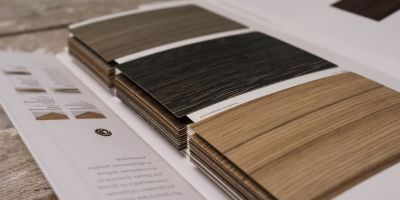
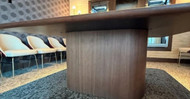
Working with curved surfaces and columns can be a challenge. While it's impossible with solid wood, wood veneer is a perfect solution, allowing you to wrap a beautiful, natural wood finish around any shape. But to do it successfully, you need to choose the right veneer backer. The backer provides the flexibility and durability needed to prevent the veneer from cracking or splitting as you bend it.
Here’s a guide to help you find the best veneer backer for curved surfaces and columns.
The Problem with Raw Veneer
Raw veneer is a single sheet of wood with no backing. While it can be used for some curves, it is brittle and prone to cracking or splitting when bent. For a successful and durable application, you should always choose a backed veneer for curves.
The Best Backers for Curves
The best backers for curved surfaces are those that balance flexibility with stability. Here is a breakdown of the most common options:
- Paper-Backed Veneer: A paper-backed veneer is a great option for curves. The paper backing adds a layer of stability and flexibility, making it a versatile choice for most standard applications and gentle curves. It's the most common and widely available backer on the market.
- Phenolic-Backed Veneer: Made with a rigid resin, this backer is durable and moisture-resistant. However, it is also less flexible than paper or fleece. Phenolic-backed veneer isn't recommended for tight curves, but it can work on very gentle curves or large, slightly rounded surfaces.
- Wood-on-Wood Veneer (W.O.W.): This is a flexible, three-layer product perfect for tight curves. It is essentially a thin piece of plywood with a decorative wood veneer as the top layer. The backer layers are arranged with their grains running in perpendicular directions, which gives the material its impressive flexibility while preventing glue bleed-through and adding stability.
Key Considerations
When choosing a backer for a curved surface, consider these factors:
- Tightness of the Curve: For a very tight radius or a complex shape, fleece-backed veneer is the best choice. For a wide, gentle curve, a paper backer will work perfectly.
- Adhesive: The adhesive you use is just as important as the backer. A flexible contact cement or a slow-drying wood glue is best for working with curves.
Conclusion
For curved surfaces and columns, the right veneer backer is the key to a professional, lasting result. While raw veneer can be brittle, fleece and paper-backed veneers provide the flexibility and strength needed to wrap any shape in the beautiful, natural finish of real wood.